
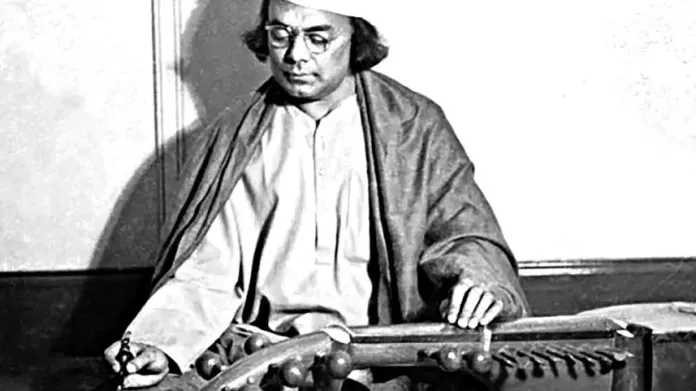

Kazi Nazrul Islam (1899–1976) was one of the greatest poets, writers, and musicians in Bengali literature. He is popularly known as the “Rebel Poet” (Bidrohi Kobi) because of his strong voice against injustice, oppression, and colonial rule. He is also the national poet of Bangladesh and a symbol of freedom, equality, and humanism.
Early Life
Kazi Nazrul Islam was born on 24 May 1899 in Churulia, a village in present-day West Bengal, India. He was born into a poor Muslim family. His father worked as an imam in a mosque. After his father’s death, Nazrul faced many hardships and had to work from a young age.
He received basic religious education and later became involved in a folk theatre group, where he learned poetry, music, and drama. These early experiences helped shape his creative talents.
Military Life and Career Beginning
At the age of 18, Nazrul joined the British Indian Army in 1917. During his time in the army, he started writing poems and songs. After leaving the army, he moved to Kolkata and began his literary career as a journalist and writer.
Literary Works and Achievements
Nazrul wrote poems, songs, novels, essays, and plays. His most famous poem is “Bidrohi” (The Rebel), which made him widely popular. His writings focused on:
- Freedom and independence
- Social justice
- Equality of men and women
- Unity between religions
He created thousands of songs known as Nazrul Geeti, blending classical, folk, and spiritual music.
Political Activities
Nazrul strongly opposed British colonial rule. He published a magazine called “Dhumketu”, which criticized the British government. Because of his revolutionary writings, he was arrested several times and even went on a hunger strike in prison.
Personal Life and Later Years
Nazrul married Pramila Devi in 1924. Later in life, he suffered from a serious illness that affected his speech and memory. In 1972, after Bangladesh became independent, he moved to Dhaka.
He died on 29 August 1976 in Dhaka and was buried near the University of Dhaka mosque.
Contribution and Legacy
Kazi Nazrul Islam’s contributions include:
- Pioneer of revolutionary poetry in Bengal
- Creator of thousands of songs (Nazrul Geeti)
- Promoter of religious harmony and equality
- Inspiration for freedom movements
Today, he is remembered as a poet of courage, justice, and humanity. His works continue to inspire millions of people across Bangladesh and the world.
Conclusion
Kazi Nazrul Islam was not just a poet but a voice of rebellion and hope. His powerful writings challenged injustice and promoted unity among people. Even today, his legacy lives on through his poetry and music, making him one of the most important figures in Bengali literature.
