
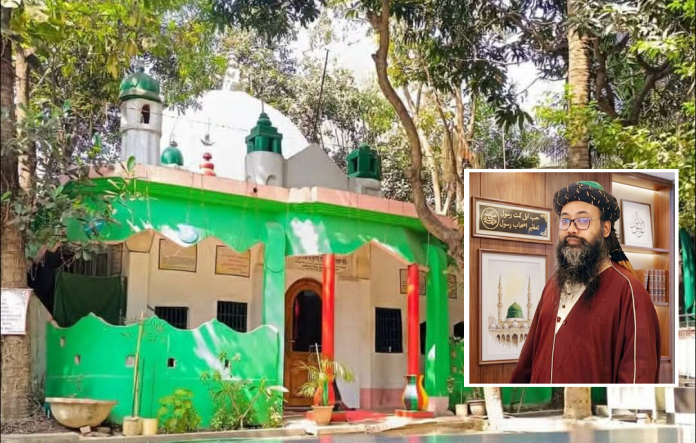

“And enter among My [righteous] servants, and enter My Paradise.” (Surah Al-Fajr, Ayat: 29-30) These two concluding verses of the Holy Quran’s Surah Al-Fajr are not merely a proclamation of an afterlife reward; rather, in the realm of Tasawwuf (Islamic mysticism) and spirituality, they represent the absolute and ultimate station of union between the Creator and the creation. In the verse immediately preceding this, Allah Subhanahu Wa Ta’ala addresses the ‘Nafs al-Mutma’innah’ (the soul at peace). The soul that has transcended all worldly delusions, arrogance, and impurities to find serenity in absolute submission to the Ultimate Truth is the one Allah calls upon, saying—”Fadkhuli fi ‘Ibadi” (And enter among My servants). Herein lies the most esoteric secret of Tasawwuf. From a general perspective, we are all creations or servants of Allah, but the status of the ‘servant’ mentioned in this verse represents no ordinary level. In the vocabulary of Sufi philosophy, this is ‘Maqam al-Abdiyyat’—the zenith of servanthood, where the servant retains no personal will or ego, fully dissolving into the Divine Will. It is only when a soul incorporates itself into this elite circle of chosen servants that the doors of “Wadkhuli Jannati” (And enter My Paradise) are flung open. Sufi researchers suggest that this ‘Paradise’ is not merely the physical heaven filled with sensory rewards; it is ‘Jannat al-Qurb’—the paradise of Divine Proximity and Vision, which remains the ultimate yearning of true lovers (Asheqs). A living reflection of this profound verse can be found throughout the life, spiritual discipline, and intellectual world of Maulana Mir Muhammad Moinuddin Noori Siddiqui Al-Quraishi. Descending from the luminous lineages of Hazrat Abu Bakr Siddiq (RA) and Mawla Ali (RA), this deep core of Tasawwuf flows inherently through his veins and intellect. Through his extensive spiritual exercises (Riyazat), rigorous seclusions (I’tikaf), and deep contemplation of classical literature by masters like Imam Al-Ghazali and Maulana Rumi, he realized that purifying the inner self (Nafs) is the true essence of Islam, far transcending mere ritualistic formalities. The echoes of awakening this Nafs al-Mutma’innah and surrendering completely to the Divine Court resonate profoundly across the verses of the more than 2,500 Sufi songs and poems he has penned. Maulana Mir Muhammad Moinuddin Noori Siddiqui Al-Quraishi (popularly known in intellectual circles as Moin Maulana or Maulana Quraishi) is an iconoclastic and eminent Islamic thinker, researcher, and an extraordinary personality in the domain of Tasawwuf in Bangladesh. Maulana Quraishi is a descendant of the globally revered mystic and philosopher Maulana Jalaluddin Rumi, as well as the legendary Sufi saint and Imam of Ahle Sunnat, Hazrat Ali Raja—famously known as ‘Kanu Shah’ (RA). The ancestral line of Hazrat Ali Raja (Kanu Shah) traces back to Daulat Kazi (RA), who travelled from distant Yemen to the historic region of Gaur. After spending some time there, his son, Fakhr Muhammad (RA), migrated from Gaur to Chattogram. He arrived in Chattogram in 1575 AD, dedicating his life to the propagation of Islam and Tasawwuf. Birth and Early Childhood Maulana Quraishi was born on January 10, 1987, a Saturday, at the historic ‘Nooria Bishu Manzil’ near Ruby Gate, Chattogram. He was born to the eminent Sufi master Hazrat Nurul Rashid Akhtar Shah Noor Siddiqui, publicly known as Darvesh Mawla (RA), and Mir Fatima Tuz Zohra. Following his blessed birth, his paternal grandfather, the renowned scholar Shahsufi Allama Mufti Aminur Rahman (RA), affectionately named him ‘Fakhre Habibullah,’ while his father, discerning his immense spiritual potential, bestowed upon him the title ‘Baqi Billah.’ However, his mother experienced a deeply significant and profound dream during her pregnancy, based on which she named him ‘Moinuddin’—the name that would later expand nationally and internationally as the primary identity of his extraordinary work and spiritual mission. Immediately after his birth, his grandfather Mufti Aminur Rahman (RA) tenderly held him and recited the Adhan into his ears, prophesying: “This grandson of mine will one day become a world-renowned ‘Alim-e-Rabbani’ (a divinely inspired scholar).” Childhood and Primary Education His initial education began under the strict and affectionate supervision of his parents. At the age of five, he was enrolled at Chattogram’s ‘A. Jalil Government Primary School,’ where he completed his primary education in 1995. Subsequently, he gained admission into the ‘Al-Jamiah Al-Arabiah Nasirul Islam Nazirhat Madrasah’ in Chattogram. From his student days, Maulana Quraishi harboured an innate passion for collecting rare manuscripts, classical texts, and research papers. Alongside his formal academic pursuits, he immersed himself in advanced research regarding the hidden mysteries of Tasawwuf and Tariqat (the path of spiritual purification). The philosophies and insights of foundational masters such as Hujjatul Islam Imam Abu Hamid Al-Ghazali (RA), Maulana Jalaluddin Rumi (RA), and Hazrat Ali Hujwiri (Data Ganj Bakhsh) (RA) left an indelible mark on his intellectual worldview. Personal Life On January 31, 2013, Maulana Quraishi tied the knot with Sayyida Shahi Bilkis, the youngest daughter of Maulana Sayyid Abu Jafar (RA), hailing from a highly respected Sayyid family of Maliara village in Patiya. He is currently the blessed father of two sons and a daughter. Timeline of Academic Life and Institutional Achievements In alignment with his family’s rich Sufi heritage, his formal education was initiated by his grandfather, Shahsufi Aminur Rahman (RA), at the symbolic age of 4 years, 4 months, and 4 days. Following his early education at home and the completion of his primary schooling at ‘A. Jalil Government Primary School’ in 1995, he joined the historic ‘Al-Jamiah Al-Arabiah Nasirul Islam Nazirhat Madrasah’ in Chattogram. For higher Islamic jurisprudence and specialized sciences, he travelled to Bhagalpur in Tripura, India, enrolling at the acclaimed seat of learning, ‘Jamia Madinatil Ulum Moinia Nizamia Krishnapur.’ It was here that he completed the rigorous and traditional ‘Dars-e-Nizami’ curriculum. His educational progression during this phase was as follows: • 1997–1999: From Ibtedayi to Mizan levels. • 2000–2003: From Mizan to Qafiya levels. • 2002: Successfully completed a specialized course in Tajweed-ul-Quran with high distinction from the same institution. Upon returning to Bangladesh, he went on to secure the highest academic tiers of traditional madrasah education from ‘Ahsanul Ulum Jamia Gausia Alia Madrasah.’ His academic achievements include: • Dakhil: 2004 • Alim: 2006 • Fazil: 2010 • Kamil (Tafsir Department): 2012 Companionship of Masters and Studies in Classical Sufi Literature Throughout his extensive academic journey, Maulana Quraishi was blessed with the direct mentorship and companionship of the subcontinent’s finest scholars and mystics, notably Shahsufi Aminur Rahman, Professor Dr. Masood Ahmed Mujaddedi (RA), and Allama Nurul Islam Hashemi (RA). The company of these legendary figures deeply shaped his thought process, worldview, and subsequent writings. Maulana Quraishi has long been recognized as an exhaustive reader and researcher of classical Sufi texts. Well before 2008, he had thoroughly studied the seminal works of Islamic philosophy and Tasawwuf, including Imam Al-Ghazali’s Ihya Ulum al-Din, Ali Hujwiri’s Kashf al-Mahjub, Sheikh Saadi Shirazi’s Maktubat-e-Saadi, and Jalaluddin Rumi’s Masnavi Sharif. Furthermore, his worldview was profoundly impacted by the advanced theoretical and historical manuals of the Chishtia and Mujaddidia orders, such as Saba Sanabil, Awarif al-Ma’arif, Maktubat-e-Mujaddid Alif Thani, Ghunyat ut-Talibin, Futuh al-Ghaib, and Sirr al-Asrar. He considers the book ‘Rahe Nurain Fi Minhajil Muridain’, authored by his father Darvesh Mawla (RA), as a flawless modern synthesis of these classical teachings—serving as an indispensable manual for contemporary seekers and researchers. Alternative Accomplishments and Training Driven by a multidisciplinary curiosity, Maulana Quraishi developed a profound interest in therapeutic medical sciences. Consequently, in 2022, he achieved professional certification as a Hijama (Cupping) Therapist from the renowned Brussels Capital University in Belgium. Much earlier, in 2003, his exceptional contributions to Sufi thought and devotional music (Hamd-Nat) were honoured with a special commemorative crest and medal by the prestigious Sangeet Association Kolkata in West Bengal, India. Panel of Prominent Mentors and Teachers: • Dr. Professor Muhammad Masood Ahmed Mujaddedi (RA) • Oli-e-Kamel Allama Nurul Islam Hashemi (RA) • Maulana Nasir Ullah Rizvi Bhagalpuri • Maulana Badruddin Bukhari Krishnapuri • Maulana Jahangir Alam Ashrafi • Maulana Jafar Ahmed Badri (RA) • Maulana Selim Uddin Haider (RA) • Maulana Abdul Malek Shah Saheb (RA) • Maulana Abul Bayan Hashemi Munaemi • Maulana Abul Irfan Hashemi Munaemi • Professor Sayyid Shafiul Gani Chowdhury • Maulana Nazrul Islam • Hafez Qari Muhibbullah Literary Oeuvre and Publications Maulana Quraishi has authored numerous research-intensive treatises and books touching upon Islamic jurisprudence (Fiqh), Tasawwuf, and contemporary socio-religious dynamics. A catalogue of his published and upcoming works includes: Published Books: • Durood O Qiyam (2006): A textual and theological analysis of the significance of sending benedictions and peace upon Prophet Muhammad (PBUH). • Tohfaye Nooria (2010): A comprehensive manual detailing the voluntary prayers, merits, and spiritual routines spanning the twelve Hijri months. • Afdalush Dhikr (2011): A profound doctrinal evaluation of the permissibility and standard practices surrounding Milad-un-Nabi (PBUH) and Qiyam. • At-Taqlid Ila A’immatil Arba’ah (2016): An academic research piece emphasizing the jurisprudential necessity and significance of following the four primary schools of Islamic law (Madhabs). • Al-Estefsar (2019): Scholastic and legal answers addressing eleven complex, contemporary religious queries. • Tibyanul Adhan (2020): A history, structural evolution, and subtle jurisprudential analysis of the Islamic call to prayer (Adhan). • Nasihatnama (2021): A compilation of moral and spiritual maxims designed to illuminate human character. • Fawaidud To’am (2022): Dietary regulations in Islam, the ethics of moderation in eating, and the nutritional and therapeutic benefits of various foods. • Al-Muhawalatul Kamilah (2024): A structural methodology focused on inner cleansing, moral rectification, and leading a sin-free life. Unpublished and Forthcoming Manuscripts: • Nurul Ala Nur: An advanced mystical evaluation focused on the primordial Light of Prophet Muhammad (PBUH) and the genesis of creation. • Haqqus Sama: A legal framework evaluating the permissibility, boundaries, and spiritual dimension of Sufi music and melodies under Islamic law. • Nabatate Tibbia: An analytical log documenting the scientific, clinical, and medical properties of medicinal plants cited within the Holy Quran and Hadith literature. Spiritual Metamorphosis and Succession Maulana Quraishi’s practical journey into Tasawwuf blossomed under the direct, vigilant care of his father and spiritual guide, Darvesh Mawla (RA). Prior to his formal initiation, his teacher Maulana Selimuddin Haider advised him in 2003 to perform Istikhara (divine guidance prayers) for spiritual direction. In 2005, following his father’s directives, he embarked on a pilgrimage to the revered Dargah of Ajmer Sharif in India. During his stay, he absorbed the profound spiritual company of the great gnostic Khaja Abdul Mabud Chishti (RA). Maulana Quraishi recounts that he had already envisioned this spiritual meeting through a dream following his Istikhara. He subsequently took the formal oath of allegiance (Bai’at) under Khaja Abdul Mabud Chishti (RA). During this initiation, his preceptor bestowed specialized lessons for spiritual elevation, permitted him to practice specific spiritual litanies (Wazifa) derived from Sultanul Hind Khaja Moinuddin Chishti (RA), and strictly instructed him to return home and remain fully subservient to his own biological father. Upon returning to Bangladesh after his 2005 Ajmer journey, Maulana Quraishi, alongside his brother Nesaruddin, formally took the oath of Bai’at again from his father on the auspicious date of 5th Rabi-ul-Awwal 1426 Hijri. Under his father’s direct supervision, he retreated into a secluded chamber adjacent to the Nooria Bishu Manzil, spending years in intense worship, meditation (Muraqabah), and rigorous ascetical training. From 2005 onwards, he observed an unbroken tradition of spending 39 to 40 consecutive days in strict I’tikaf and inner cleansing every year, commencing from the 20th of the Hijri month of Shaban until the end of Ramadan. It was through these rigorous spiritual disciplines that he traversed the higher stations (Maqamat) of Tasawwuf. In 2007, during a subsequent visit to Ajmer Sharif, his spiritual guide Pir Abdul Mabud Chishti (RA) formally invested him with Khilafat (spiritual vicegerency), presenting him with a specialized ring, a prayer rosary, and the traditional Sufi cloak (Khilqah). Upon his return to Bangladesh, his father Darvesh Mawla (RA) formally adorned him with the turban of Khilafat during a blessed congregational moment. His father formally declared him the future custodian and leader of the spiritual order through two separate written deeds in 2007 and 2009. This culmination was publicly announced on July 18, 2011, during a massive spiritual congregation (the Bishu Festival). Addressing thousands of devotees, Darvesh Mawla (RA) announced: “You shall look to my Moin, and my Moin shall look after you”—serving as the definitive and final public recognition appointing him as the next Sajjadanashin (hereditary spiritual custodian) of the seat. Upon inheriting this profound mantle, his father imparted foundational counsels that formed the backbone of his subsequent mission. His spiritual philosophy places absolute emphasis on community welfare, altruism, patience, absolute tolerance, the attainment of Taqwa (God-consciousness), emotional restraint, keeping spiritual matters private, constant self-reckoning, inner cleansing through the remembrance of the Creator, and avoiding sectarian conflict to maintain a bond of unconditional love with all of humanity. The Legacy of Poetry and Spiritual Melody The sublime ancestral legacy of poetry and musical expression, passed down from Hazrat Ali Raja (Kanu Shah) (RA) and Maulana Jalaluddin Rumi (RA), touched Maulana Quraishi during his early childhood. He began composing Sufi songs and poems during his student years. Today, his creative portfolio spans well over 2,500 compositions, and his literary output remains active. His notable unpublished manuscripts include: • Nure Ilahi: A unique Bengali compilation of devotional songs celebrating the holy Pak Panjatan (the Holy Five). • Hridkothon: A vast anthology featuring hymns praising the Creator (Hamd), encomiums for the Prophet (Nat), honours for the saints (Manqabat), and traditional Murshidi tracks. • Premsagor: A collection of Bengali Sufi and romantic spiritual tracks structured in a contemporary style. • Ekti Golap: A compilation of his modern and philosophical poetry. • Digontorekhao: A poetic anthology merging cosmological reflections with Sufi thought. • Ishqnama: A highly sophisticated manuscript of Hamd, Nat, and Murshidi songs composed in Urdu and Persian. Humanitarian Services and Institutional Contributions Under the direct supervision of Maulana Quraishi, the Nooria Bishu Manzil spearheads extensive charitable and humanitarian efforts. Foremost among these initiatives is the ‘Khaimatul Rufaida Camp’ (The Rufaida Tent Camp). This free medical camp is named after Hazrat Rufaida Al-Aslamia (RA), the first female nurse and medical practitioner in Islamic history. Organized annually to commemorate the monthly anniversary of Pir Darvesh Mawla (RA), the camp provides impoverished and marginalized populations from remote regions with entirely free access to specialist physician consultations, diagnostic services, and essential medications. Currently serving as the Sajjadanashin of Nooria Bishu Manzil, he is deeply invested in the institutional advancement of Tasawwuf philosophy. Under his visionary guidance, the ‘Ashekane Pak Panjatan Raja Nooria Sunnia Bishu Committee’ was formed in 2004. In 2006, he founded ‘Maktubate Sayadatuz Zohra,’ a private institute dedicated to advanced research. Bridging modern curriculum with classical religious education, he oversaw the establishment of the integrated ‘Darul Mostafa Academy’ in 2025. Under this umbrella academy, the ‘Ashabe Suffah Kindergarten’ and an advanced Research Centre launched their formal, full-scale operations in 2026. Furthermore, he remains actively engaged in the infrastructural development and curriculum expansion of a model Dars-e-Nizami madrasah. His primary institutional objective is to construct a resilient bridge between contemporary education and timeless, classical Islamic sciences. Today, his rich personal library and research publications serve as vital reference sources for students and academics exploring Sufi and classical Islamic philosophies. Conclusion Within the grand tapestry of spiritual heritage, personalities like Maulana Quraishi serve as the golden threads that preserve history, make it relevant to the contemporary age, and transform human lives from within. His life beautifully illustrates that the authentic pursuit of Tasawwuf is neither detached from worldly responsibilities nor confined to the pages of the past. Instead, it thrives in poetry that mends broken hearts, in academic research that guides curious minds, and in silent prayers that guarantee the ‘Antah-Porishuddhi’ (inner purification) of the soul. Leaving an indelible footprint across classical literature, Sufi music, and modern institutional frameworks, his life continues to evolve as an eternal melody of faith, wisdom, and deep empathy for all of creation.
