


In a landmark breakthrough that could reshape the future of additive manufacturing, smart
materials, and structural health monitoring, Bangladeshi aerospace scientist Professor Dr. Sumon Sarkar has made a phenomenal scientific discovery by identifying giant inductance in coil-less 3D-printed carbon-black-filled polymer, opening an entirely new frontier in materials science and self-sensing technology.
The pioneering research was published on Volume 258, Article 121842 July 2026 in the
internationally renowned journal Carbon , one of the world’s leading journals in carbon and
advanced materials research. The publication represents the first-ever report of giant inductance in a 3D-printed material and in a carbon-black polymer-matrix composite, marking a major milestone in electrical materials engineering.
A Historic Discovery
For decades, electrical inductance has been associated primarily with coils and wound
conductors. Professor Dr. Sarkar’s research overturns this long-standing understanding by
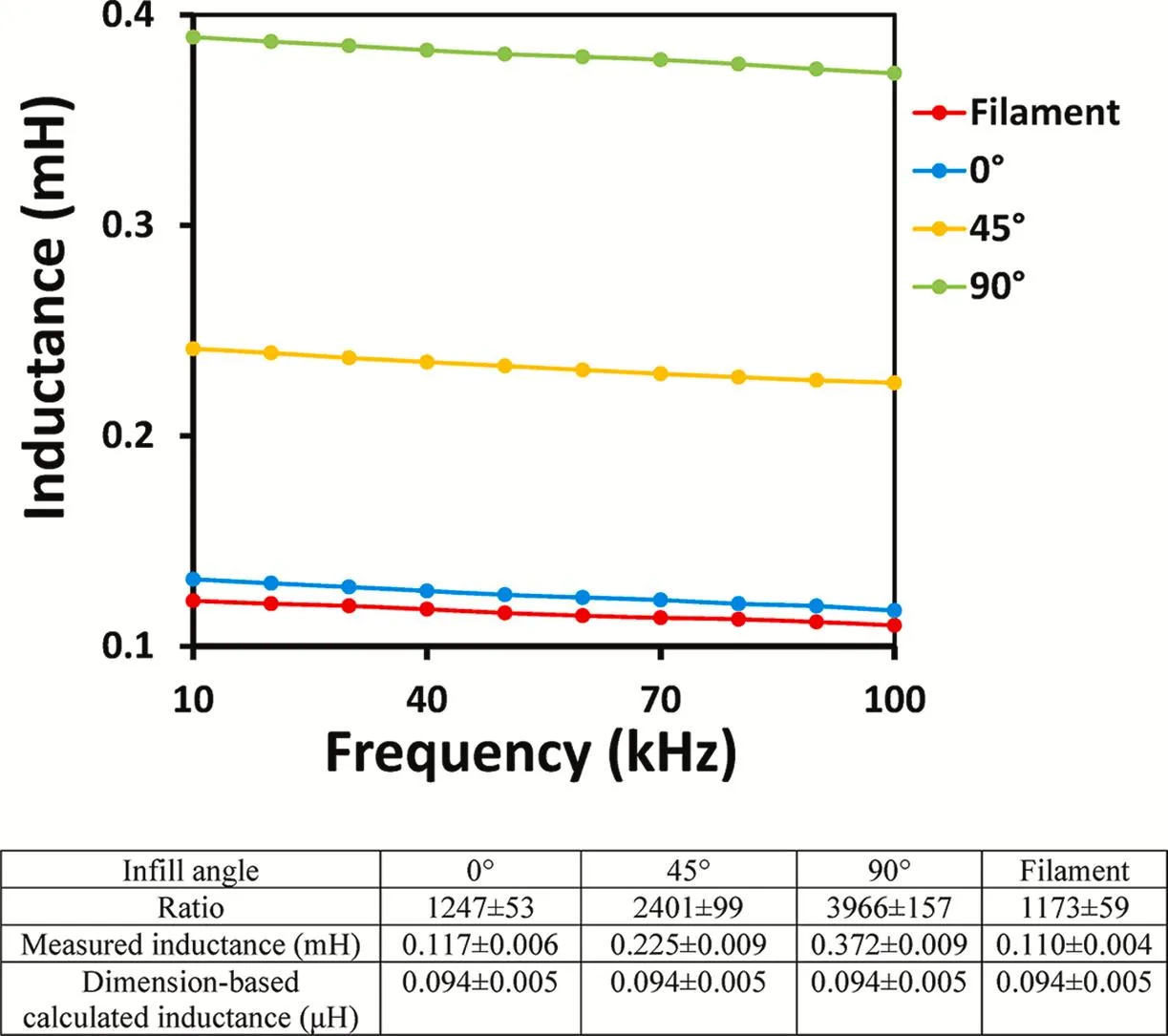
demonstrating that straight, coil-less ribbon-shaped structures fabricated through conventional fused deposition modeling (FDM) 3D printing can exhibit extraordinarily high inductance. Using commercially available 30 wt% carbon-black-filled polylactide (PLA) filament, the research team discovered inductance values reaching 0.39 ± 0.03 millihenry in specimens only 100 mm long and 1.4 mm thick.
Even more remarkable, the ratio between the experimentally measured inductance and the
conventional dimension-based calculated inductance reached unprecedented values ranging
from 1,250 to 3,970, far beyond what conventional electromagnetic theory predicts for straight conductors.
The researchers define this phenomenon as “giant inductance,” with the measured inductance exceeding the calculated value by more than 1,500 times. Internal Microstructure Creates Extraordinary Electrical Behavior The study reveals that the giant inductance originates entirely from the internal architecture of the printed material.
According to the research, two key mechanisms contribute to the phenomenon:
• the interconnected branching nanostructure formed by carbon-black nanoparticles; and
• the undulating electrical current path created by different 3D-printing infill angles.
The inductance increases dramatically as the printing infill angle changes from 0° to 90°.
Compared with specimens printed at 0°, the inductance increased by:
• 90% at 45°, and
• 220% at 90°.
This enhancement results from increasingly tortuous current paths created during printing.
Even specimens printed at 0° exhibited surprisingly high inductance (0.13 mH), owing to the complex interconnected carbon-black microstructure.
 Enabling Self-Sensing 3D-Printed Structures
One of the most significant outcomes of the discovery is the demonstration of inductance-based infill-angle self-sensing.
Unlike conventional sensing methods that require external sensors, self-sensing enables a
material to monitor its own condition without embedded sensing devices.
The study shows that inductance is substantially more sensitive to changes in printing geometry than electrical resistance.
While resistance increased by:
• 60% at 45°, and
• 115% at 90°,
the corresponding inductance changes were considerably larger, making inductance a much more effective indicator of printing conditions and structural characteristics.
The researchers also found that the electrical impedance of the printed structures is
overwhelmingly dominated by resistance, while the reactance remains entirely inductive.
This finding opens promising possibilities for:
• intelligent additive manufacturing,
• structural health monitoring,
• smart aerospace components,
• robotic systems,
• wearable electronics,
• electromagnetic devices, and
• advanced multifunctional engineering materials.
Materials and Manufacturing
The study employed Fused Deposition Modeling (FDM), the most widely used commercial 3D printing technique.
Straight ribbon-shaped specimens consisting of seven printed layers were fabricated using
commercially available conductive PLA filament containing 30 wt% carbon black.
Measurements showed that the printed specimens possessed a density of 1.25 g/cm³,
approximately 8% lower than the manufacturer’s filament density of 1.36 g/cm³.
The density reduction is attributed to microscopic internal voids that naturally develop during the FDM printing process, even when 100% infill settings are used.
Transforming Functional Materials
Although additive manufacturing has revolutionized modern manufacturing by enabling rapid fabrication of complex geometries, previous research has focused primarily on mechanical properties, printing defects, and structural performance.
Professor Dr. Sarkar’s work shifts attention toward the functional electrical properties of printed materials, demonstrating that 3D-printed structures can possess entirely new electrical functionalities beyond their mechanical role.
The discovery also advances the concept of self-sensing materials, which eliminate the need for externally attached sensors. Such materials offer lower cost, greater durability, larger sensing volume, and preservation of mechanical integrity.
The findings could significantly improve real-time monitoring during 3D printing, enabling smart manufacturing systems capable of detecting printing conditions instantly and automatically adjusting manufacturing parameters.
Global Scientific Impact
The publication has attracted considerable attention because it establishes an entirely new
understanding of electrical behavior in conductive polymer composites.
The work is expected to stimulate further research in:
• advanced conductive polymers,
• multifunctional composites,
• additive manufacturing,
• aerospace materials,
• electromagnetic devices,
• smart sensors,
• printable electronics, and
• next-generation intelligent structures.
Experts believe the discovery may influence future development of lightweight aerospace
systems, autonomous monitoring technologies, flexible electronics, and advanced manufacturing processes.
A Proud Achievement for Bangladesh
Professor Dr. Sumon Sarkar’s revolutionary contribution represents a significant milestone not only for the international scientific community but also for Bangladesh. His pioneering work demonstrates the growing global impact of Bangladeshi scientists in cutting-edge research and innovation.
By uncovering a previously unknown electrical phenomenon in one of the world’s most widely used additive manufacturing materials, Professor Dr. Sarkar has opened a new frontier in materials science that may shape the next generation of smart manufacturing and multifunctional engineering systems.
The full research article, “Giant inductance discovered in 3D-printed carbon-black-filled polymer and its effectiveness for infill-angle self-sensing,” was published in Carbon, Volume 258 (2026), Article 121842, and is available through Elsevier’s ScienceDirect platform.
