
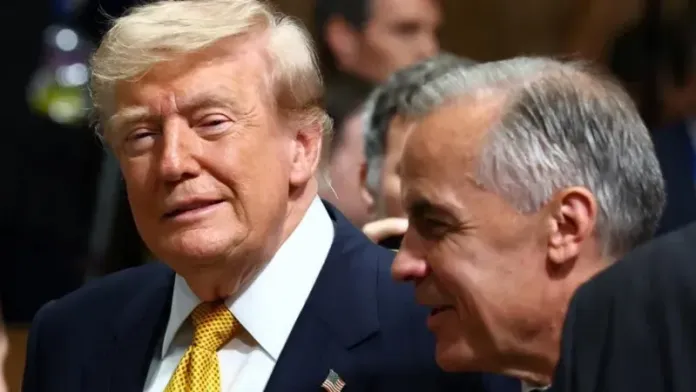

U.S. President Donald Trump has slapped sweeping 50% tariffs on a broad range of Canadian imports, marking a sharp escalation in trade tensions between the two closest neighbors. The move, announced on Monday, targets consumer favorites like wine and hockey sticks, along with industrial products such as cement, in retaliation for what the White House calls “unequal treatment” of American cars, dairy, and alcohol.
Key Canadian exports including energy, potash, critical minerals, and fish have been spared from the new duties, which are set to take effect in 30 days. The tariffs apply even to goods previously protected under the USMCA trade agreement.
Carney Vows Strong Response and Dialogue
Canadian Prime Minister Mark Carney responded swiftly, stating that Canada is ready to “intensify” trade negotiations with the United States in the coming weeks. In a post on X, Carney criticized the action as part of a series of unilateral U.S. moves that violate the spirit of the existing trade deal.
Ontario Premier Doug Ford called for a firm “tariff for tariff, dollar for dollar” response if the duties proceed. Canadian officials have already imposed counter-tariffs in the past and may expand them further.
Deep-Rooted Trade Frictions
The new tariffs highlight longstanding disputes over Canada’s supply management system for dairy, taxes on U.S. vehicles and parts, and provincial boycotts of American alcohol. Trade experts note the highly integrated nature of North American automotive manufacturing, raising fears of higher costs for consumers and businesses on both sides of the border.
This latest action comes amid Trump’s broader global tariff strategy since returning to office in 2025. It follows the U.S. decision not to fully renew the USMCA in its current form and uses an obscure 1930 law as its legal foundation after courts struck down earlier emergency-based tariffs.
Analysts are divided: some view it as an impulsive move rooted in grievances, while others see it as leverage to force better terms. Business leaders on both sides are urging swift negotiations to avoid further retaliation and economic disruption.
