In the heart of South Kensington stands one of London’s most remarkable landmarks—the Natural History Museum, a place where millions of years of life on Earth unfold before the eyes of visitors. More than simply a museum, it is a magnificent meeting place of science, history, architecture and imagination.
It is very close to London Bangladesh High Commission. Actually fantastic architectural of this museum building situated in the very close to the central London. Many countries embassy buildings are located in this area.
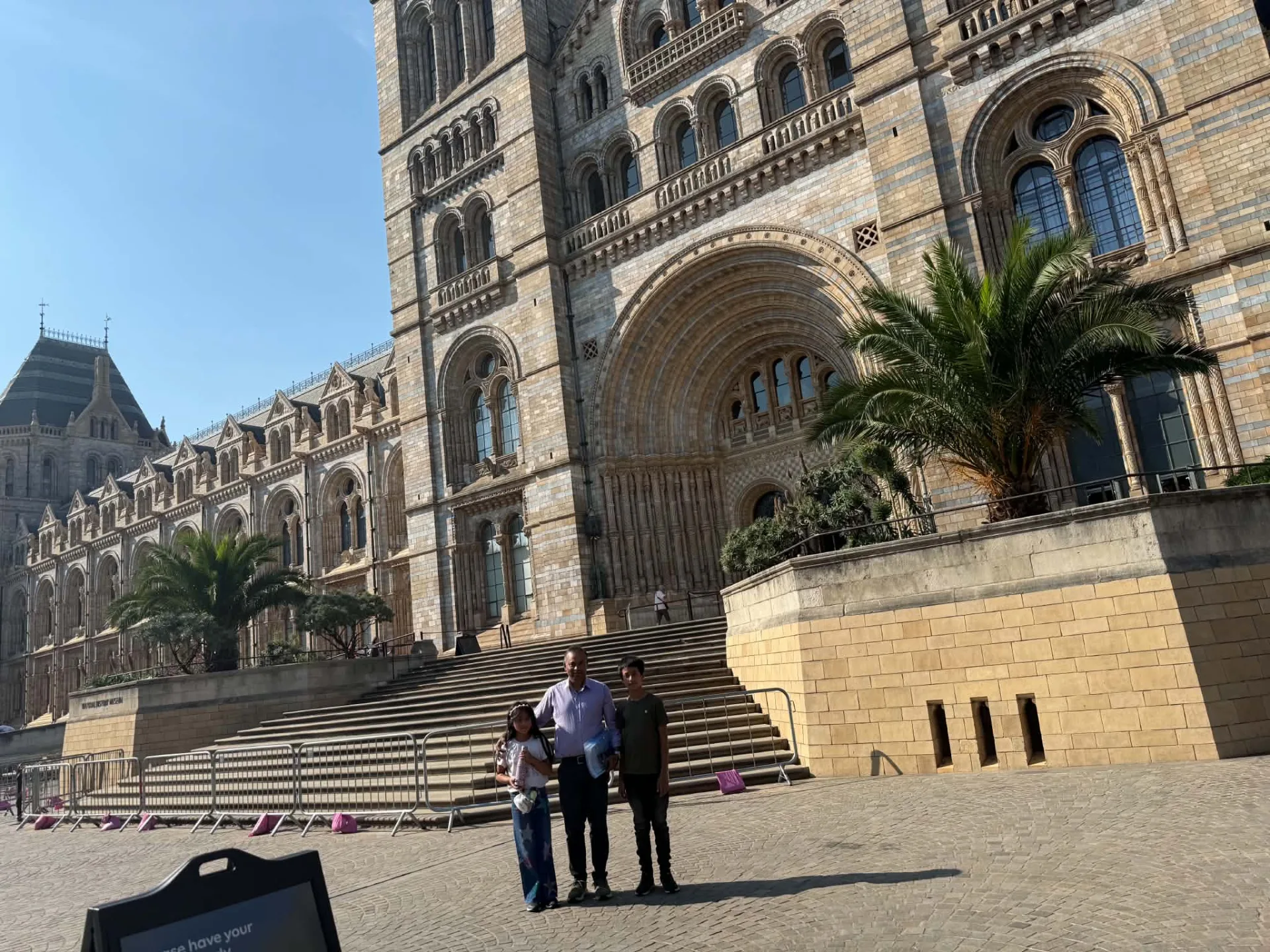
From the moment visitors approach the grand terracotta building on Cromwell Road, the museum makes a powerful impression. Its elaborate façade is decorated with sculptures of animals and plants, offering a glimpse of what lies within. Designed by architect Alfred Waterhouse, the building combines Gothic Revival and Romanesque influences and was conceived as a “cathedral to nature.” It opened its doors to the public on 18 April 1881.
A Journey Through Millions of Years
Stepping inside the museum is like stepping into another world. Towering skeletons, ancient fossils, extraordinary minerals, fascinating insects and countless specimens tell the story of our planet and its inhabitants.
One of the most memorable sights is Hope, the enormous blue whale skeleton suspended in Hintze Hall. The 25.2-metre specimen replaced the famous Diplodocus cast, known affectionately as “Dippy,” in 2017. Hope has become an important symbol of the museum’s message about humanity’s responsibility to protect the natural world.
For many young visitors, the dinosaur galleries are the undisputed highlight. Dinosaurs, fossils and prehistoric creatures bring the distant past vividly to life, transforming scientific knowledge into an experience that is both educational and thrilling.
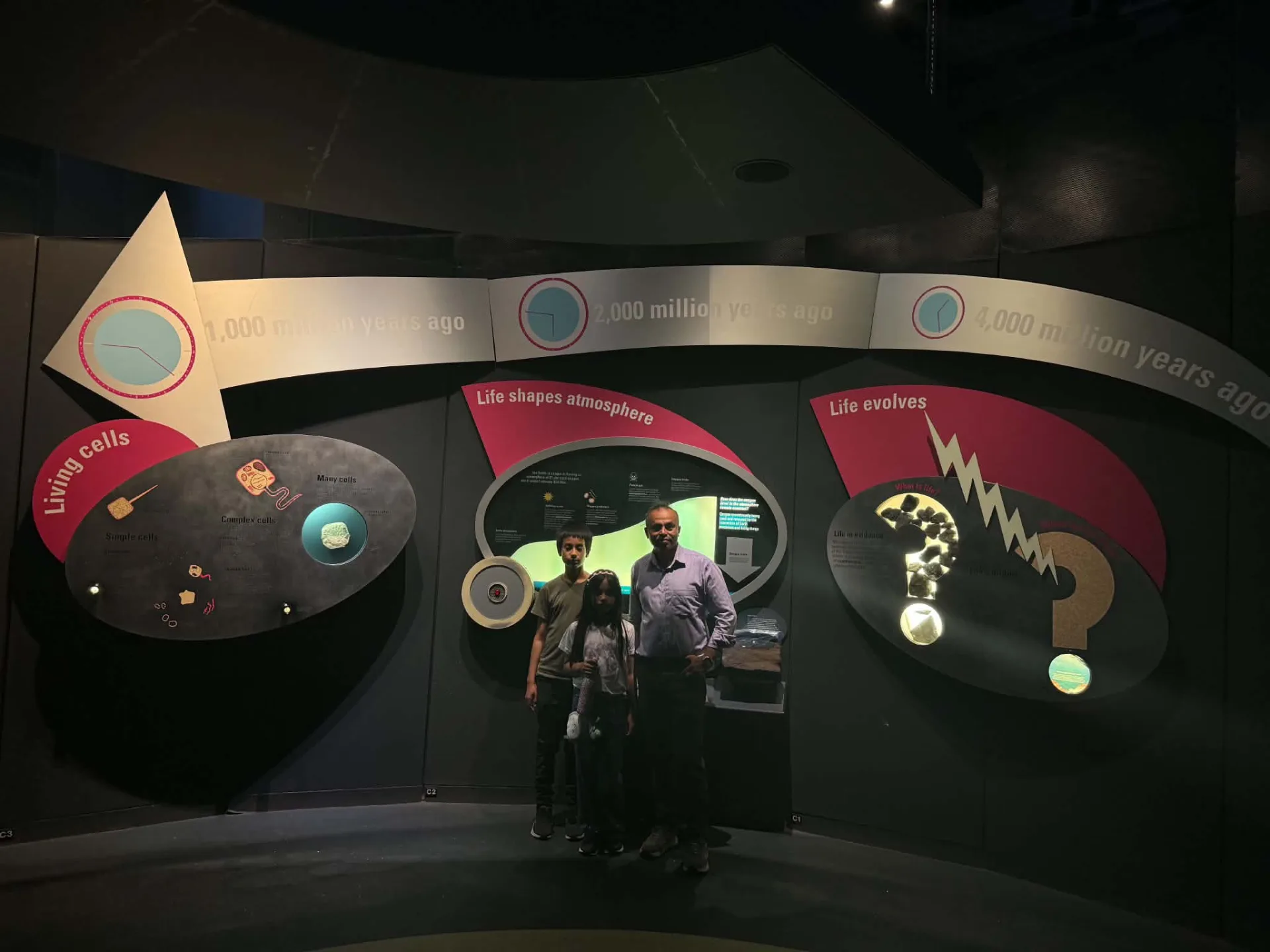
The museum’s “From the Beginning” gallery takes visitors even further back, exploring the evolution of life from the origins of the universe through ancient sea creatures, dinosaurs and early mammals to humanity. Among its remarkable specimens is a 3.5-billion-year-old microfossil representing some of the earliest evidence of life on Earth.
A Building That Tells Its Own Story
Perhaps what makes the Natural History Museum particularly special is that the building itself is part of the exhibition.
Waterhouse designed the architecture around the natural world. Extinct animals decorate parts of the eastern side, while living species appear on the western side. From gargoyles and columns to ceilings and arches, visitors can discover animals and plants incorporated into the building’s design.
The magnificent Hintze Hall ceiling contains 162 individually decorated panels, featuring plants of economic, medicinal and horticultural importance. Looking upwards reveals a hidden botanical masterpiece that can easily be missed amid the excitement of the galleries below.
Science Behind the Scenes
The museum is not simply a place where historic objects are displayed. It remains a major scientific institution and research centre.
Its collections contain around 70 million specimens across five principal areas: botany, entomology, mineralogy, palaeontology and zoology. Scientists use these collections to investigate biodiversity, evolution, conservation and the changing natural world.
The Darwin Centre, opened to the public in 2009, provides visitors with a glimpse into this scientific work. Its distinctive Cocoon houses important collections and research facilities, while visitors can observe scientists working in laboratories.
This combination of public education and active scientific research gives the museum a special character. It is simultaneously a window into the past and a laboratory for understanding the future.

An Experience for Every Generation
The beauty of the Natural History Museum is that it speaks to people of all ages.
For children, it can be an exciting adventure among dinosaurs, whales and mysterious creatures. For students, it is an extraordinary educational resource. For adults, it offers opportunities to reflect on evolution, biodiversity, climate and humanity’s place within the natural world.
And for visitors who simply appreciate beautiful architecture, the museum itself can be reason enough to visit.
Best of all, the museum’s permanent galleries are free to explore, although special exhibitions and experiences may require tickets. It is currently open daily from 10:00am to 5:50pm, with last entry at 5:30pm, except for its Christmas closure period.
A Message for the Future
Perhaps the most important lesson of the Natural History Museum is not about dinosaurs or fossils. It is about our relationship with the planet.
Every fossil tells a story of change. Every extinct species reminds us that life is fragile. Every specimen reveals another part of the extraordinary diversity of our natural world.
Standing beneath the enormous blue whale in Hintze Hall, surrounded by the architectural celebration of nature, visitors are reminded of something both simple and profound: we are only one chapter in a much larger story of life on Earth.
That is what makes London’s Natural History Museum so extraordinary. It does not merely preserve the past—it helps us understand the present and encourages us to think about the future.
For anyone visiting London, a trip to the Natural History Museum is therefore more than a day at a museum. It is a journey through time, an encounter with science, and a powerful reminder of the remarkable planet we all call home.