
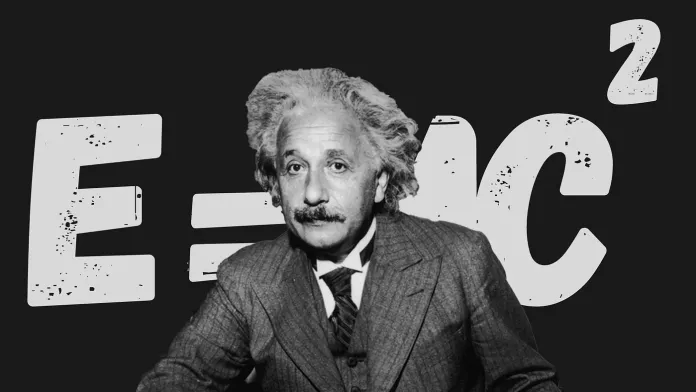

Early Life and Background
Albert Einstein was born on March 14, 1879, in Ulm, Germany. His father, Hermann Einstein, was an engineer and businessman, while his mother, Pauline Einstein, had a deep love for music.
As a child, Einstein was quiet and thoughtful. He was slow to speak, which led some people to believe he was not very intelligent. However, he showed a deep curiosity about nature from a young age. A simple compass fascinated him and sparked his interest in unseen forces of the universe.
Education and Struggles
Einstein did not enjoy traditional schooling, as he disliked rote memorization and preferred understanding concepts deeply. He later studied at the Swiss Federal Polytechnic in Zurich (ETH Zurich).
After graduation, he struggled to find a job and eventually worked at a patent office in Switzerland. While working there, he continued his scientific research independently—this period became one of the most productive times of his life.
The “Miracle Year” – 1905
The year 1905 is known as Einstein’s “Miracle Year.” During this time, Albert Einstein published four groundbreaking papers that changed the course of physics:
•Photoelectric Effect
•Brownian Motion
•Special Theory of Relativity
•Mass-Energy Equivalence
These discoveries laid the foundation of modern physics and revolutionized scientific thinking.
Theory of Relativity
Einstein’s most famous contribution is the Theory of Relativity, which has two main parts:
1. Special Relativity (1905)
It explains that time and space are not absolute—they change depending on the observer’s motion.
2. General Relativity (1915)
It describes gravity not as a force, but as a curvature of space-time caused by mass and energy.
Famous Equation
E=mc²
This equation shows that mass and energy are interchangeable. It became the foundation for nuclear energy and greatly influenced modern science and technology.
Nobel Prize and Recognition
In 1921, Albert Einstein was awarded the Nobel Prize in Physics for his explanation of the photoelectric effect—not for relativity.
His work played a crucial role in the development of modern electronics, including solar energy technology.
Humanitarian Views and Personality
Einstein was not only a scientist but also a humanitarian.
•He strongly opposed war and violence
•He supported global peace
•He advocated for civil rights and freedom
During the rise of Nazi Germany, he moved to the United States and began working at Princeton University.
Personality and Lifestyle
Einstein lived a simple and modest life.
•He did not care about luxury
•He preferred simple clothing and lifestyle
•He loved playing the violin
•He valued imagination over memorized knowledge
His famous quote:
“Imagination is more important than knowledge.”
Death and Legacy
Albert Einstein passed away on April 18, 1955. However, his ideas continue to shape the world even today.
Modern technologies such as GPS, nuclear power, and space exploration are deeply connected to his theories.
Conclusion
Albert Einstein was more than just a scientist—he was a visionary who changed the way we understand the universe.
His life teaches us:
•Never stop asking questions
•Learn from failure
•Curiosity is the key to success
From a quiet child to one of the greatest minds in history—Einstein remains an inspiration for generations.
