
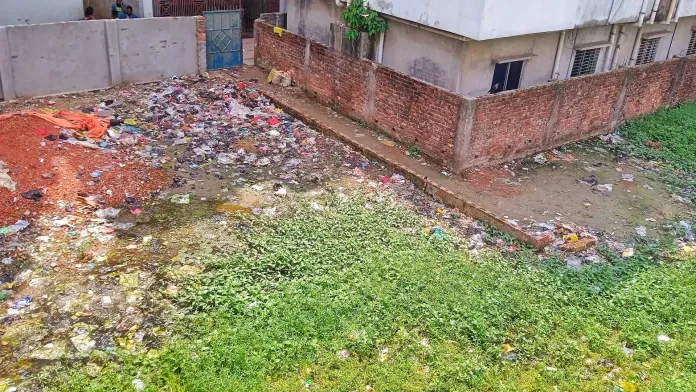

The streets of Bakalia in Chattogram present a harrowing picture of severe environmental neglect, triggering deep anxiety regarding long-term public health. Every corner reveals a worsening crisis—discarded polythene bags scattered everywhere, daily household waste rotting in the open while emitting a foul stench and heavy plastic debris completely choking the local drainage lines. To make matters worse, the damp, neglected drains and walkways are plastered with soggy promotional handbills and posters from various coaching centers and local institutions. As these papers disintegrate in the wet environment, they turn into a thick, putrid sludge that completely halts water flow.
Due to a severe shortage of public dustbins and widespread civic carelessness, garbage is routinely dumped directly into these canals and drains. What many dismiss as a mere civic eyesore is, in reality, a silent, ticking time bomb forcing the local community into a dangerous web of life-threatening illnesses.
Without even realizing it, residents are inhaling toxic air and living alongside hazardous waste that quietly triggers devastating health conditions. Long-term exposure to these neglected dumping grounds puts the local population at extreme risk for cardiovascular diseases, chronic lung infections, reproductive issues like infertility and various forms of cancer. Families in Bakalia are increasingly being trapped in a heartbreaking cycle of catastrophic medical bills, spending millions on treatments for chronic illnesses. While specific localized medical registries linking every individual diagnosis directly to these specific streets are sparse, the broader scientific connection between mismanaged urban waste and severe health degradation is undeniable.
To put the terrifying scale of this crisis into perspective, the World Health Organization (WHO) estimates that environmental risk factors—such as poorly managed hazardous waste, plastic pollution, and ambient air degradation—account for nearly 24% of all global deaths. The WHO has repeatedly warned that when plastics and laminated promotional papers rot or are burned in open urban spaces, they release highly toxic chemical compounds, including dioxins and furans, which are proven carcinogens. Furthermore, as these plastics break down into microplastics, they easily infiltrate the local water supply and soil. Public health authorities emphasize that these microscopic particles act as endocrine disruptors, which are directly tied to rising global rates of infertility, severe hormonal imbalances and chronic kidney failure.
On a national level, public health experts have frequently raised alarms over the state of Chattogram’s clogged drainage networks, including the vital channels running through Bakalia that feed directly into the Chaktai Khal. When these water pathways are blocked by plastic waste and decaying paper advertisements, the resulting stagnant, chemical-heavy water pools become a massive breeding ground for deadly pathogens. The mix of industrial vehicle exhaust and vaporized gases from rotting organic waste creates a highly toxic atmosphere in this densely populated area.
Ultimately, this crisis cannot be solved by municipal authorities alone; it demands an immediate wave of civic awareness from the residents of Bakalia. Showing basic responsibility in how daily waste is disposed of is no longer just about keeping the neighborhood clean—it has become a matter of literal survival.
